

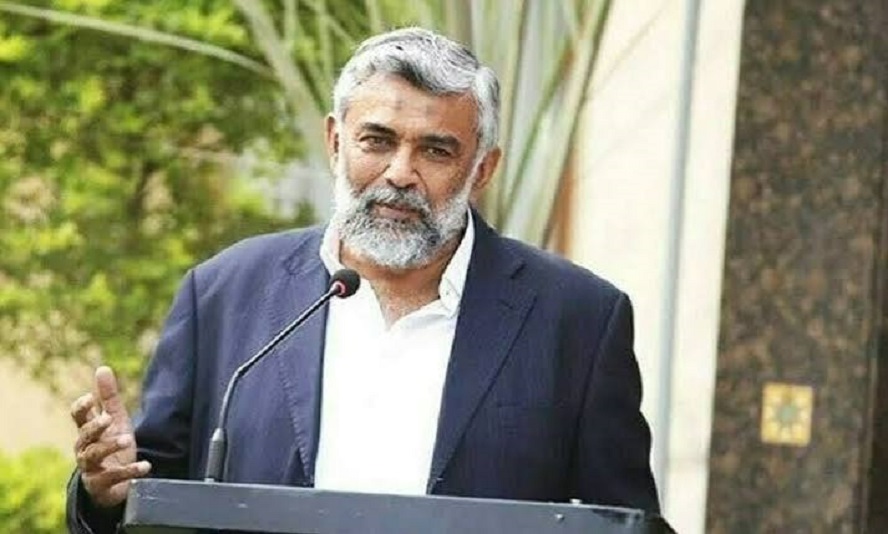
KARACHI, Oct 25 (daily paklish ): For nearly one in four households in Pakistan, putting adequate food on the table has become a daily struggle, said Pasban Democratic Party PDP Chairman Altaf Shakoor on Sunday.
Altaf Shakoor said poverty and inflation are now biting hard and according to the latest Household Integrated Economic Survey (HIES 2024-25), moderate-to-severe food insecurity has surged to 24.35 percent of households, up from 15.92 in 2018-19 — a relative increase of 53 percent in just six years. Within this group, severe food insecurity — where skipping meals and reducing portions become recurring realities — has more than doubled, reaching 5.04 percent of households. He said the crisis is driven not by a national shortage of food, but by an affordability shock. Families are dedicating a larger share of their budgets to food — 36.72 percent — while consuming less. The poorest income quintile faces a food insecurity rate of 45.9 percent, more than five times higher than the 9 percent rate in the highest quintile.
He said the burden is heaviest in Balochistan (30.3percent) and Sindh (29.4 percent), though every province now has at least one in five households experiencing moderate-to-severe food insecurity.
Altaf Shakoor said the broader poverty picture is equally grim. A World Bank assessment places Pakistan as home to nearly 48 percent of the extreme poor across the Middle East, North Africa, Afghanistan, and Pakistan (MENAAP) region . While roughly 23 percent of the population lives below the USD3.00-per-day line, approximately 49.9 percent falls below the USD4.20 lower-middle-income threshold — meaning nearly half the country remains economically vulnerable even when not classified as extremely poor.
He saidm ultidimensional deprivation tells a similar story: 38.3 percent of Pakistanis face severe deprivations in health, education, and living standards, with an additional 12.9 percent at risk of falling into acute poverty .
He said headline inflation stood at 10.3 percent year-on-year in September 2026, nearly double the 5.8 percent recorded a year earlier, with transport costs surging 27.43 percent and wholesale inflation accelerating to 13.33 percent. Petrol remains above Rs 377 per litre and high-speed diesel above Rs 393 per litre, keeping pressure on transport, production, and food distribution costs. The unemployment rate has climbed to 7.1 percent, the highest in over two decades, with 5.9 million people out of work and youth unemployment at 12.8 percent.
He said the consequences for society and economy are harsh.
The human cost is measurable: over 40 percent of children under five suffer from stunting, approximately 26 million children remain out of school, and 70 million people lack access to basic sanitation. A shrinking middle class and an expanding underclass weaken institutional trust and constrain long-term growth by limiting human capital development.
He said with debt servicing and defence consuming the lion’s share of a Rs 17 trillion budget, less than Rs 1.5 trillion remains for national development.
He proposed to go for an inflation-indexed social protection. He said the Benazir Income Support Programme (BISP) currently reaches 12 million households with quarterly cash assistance of Rs 14,500, with a proposed increase to Rs 18,000 from January 2027. Transfer values must be explicitly indexed to food inflation to prevent further erosion of real benefits.
He said market regulation and supply-side intervention are necessary. Crack down on hoarding and cartelization in essential commodities should be intensified. He said reducing energy tariffs for industrial users is essential to stimulate manufacturing and job creation.
He urged the government to broaden the tax base to shift the burden away from regressive indirect taxes that disproportionately hurt low-income households. The fiscal deficit, projected at 2.6 percent of GDP in FY2026, risks widening to 3.5 percent in FY2027 without revenue mobilization.
Altaf Shakoor called for a human capital Marshall Plan. He said education spending remains well below UNESCO’s 4–6 percent of GDP benchmark. Without sustained investment in nutrition, schooling, and basic services, cash transfers alone cannot break the cycle of intergenerational poverty.
He said the convergence of double-digit inflation, stagnant real wages, and a food system that prices basic nutrition out of reach for a quarter of the population demands immediate bipartisan consensus.
He said piecemeal measures can no longer resuscitate critical sectors — nutrition, child mortality, school attendance, sanitation, and drinking water — that are in desperate need of comprehensive reform.