

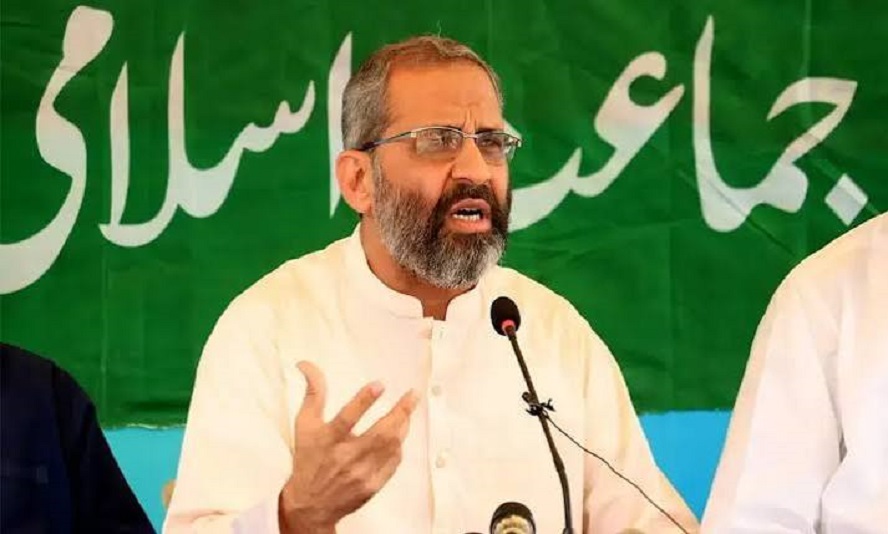
KARACHI, (daily paklish): Jamaat-e-Islami (JI) Karachi Ameer Monem Zafar Khan along with District East Ameer Naeem Akhtar, Area Nazim Mazharuddin Siddiqui and other office-bearers inaugurated and visited “Book Bank” established under “Parho Parhao” movement in Gulzar-i-Hijri area.
Monem Zafar while addressing inaugural ceremony said JI is taking practical steps for promotion of education, support of deserving students, making youth skilled and rehabilitation of government schools. Problems are many, we considering it our responsibility are striving for service of people and resolution of educational difficulties.
He said that activities were continuing for last two years under “Parho Parhao” movement, establishment of Book Bank was an important step in this series, where needy students will be able to get books. In this era of inflation, not only poor but also white-collar families are facing difficulties in fulfilling educational needs of children.
He said last year “Parho Parhao” camps were set up at about 25 places in Karachi, door-to-door contacts were made, books were collected, arranged class-wise and delivered to needy students. This activity is not limited to only provision of books but is an effort to promote education and strengthen spirit of cooperation and service in society.
He said that the JI was also working on education card programme for promotion of education. On experimental basis in Gulberg Town, about Rs30 million were allocated for this project and initiative was taken to provide educational support to about 3,000 students. Under this project, education cards up to Rs10,000 are provided to parents of deserving students, through which books, copies and other educational items can be purchased for children, he added
He said JI was planning to expand this project to other towns of Karachi and start education card programme worth about Rs500 million in next academic session.
He said steps have also been taken to provide facilities to students of University of Karachi. Memorandum of understanding was signed with University of Karachi for resolution of students’ difficulties and protection related issues and rehabilitation and improvement work was done at eight places. Providing better educational environment and facilities to youth is collective responsibility of all of us.
Monem Zafar further said JI does not only make demands but is also working practically. Steps have been taken for rehabilitation and improvement of government schools in nine towns of Karachi. Work has been done to improve buildings, drinking water, washrooms, electricity and other basic facilities of schools in different towns including Gulshan-i-Iqbal Town. Increase in number of students in schools is sign that if better facilities and proper environment is provided to government educational institutions, confidence of parents can be restored.
He said for quality education, only construction of buildings is not enough, but trained teachers, better curriculum, proper educational environment and effective administrative system are also necessary. JI is also making efforts for improvement of government schools and professional training of teachers. Our objective is that every child gets quality education and no student remains deprived of education merely due to lack of financial resources.
He said JI started “Bano Qabil” programme for making youth skilled and providing employment opportunities, which was started from Karachi and now has spread across Pakistan. In Karachi, during last two and a half to three years, more than 550,000 youth registered for this programme, while more than 100,000 youth have completed free courses. In situation of unemployment and uncertainty regarding future, connecting youth with positive activities and making them employable is important need of time.
He said that unfortunately education had been made business and it was becoming difficult for poor and middle class to educate their children. Under Article 25-A of Constitution of Pakistan, providing free and compulsory education to children of age 5 to 16 years was responsibility of the state, but even today large number of children were out of schools. “If benefit of government education budget is not reaching these children, then claims of educational emergency are of no benefit. The government will have to fulfill its constitutional responsibility and ensure educational opportunities for every child.”