

PESHAWAR (MANEND NEWS) Khyber Pakhtunkhwa on Monday launched the country’s first-ever sub-national Disaster Risk Reduction (DRR) Policy, marking a major step toward building a more resilient, climate-adaptive and risk-informed province.
The event was jointly organised by the Provincial Disaster Management Authority (PDMA) and the Relief, Rehabilitation and Settlement Department at the Chief Minister’s House here, according to a statement.
The launch event brought together senior government officials, development partners, diplomats, humanitarian organisations, academia, civil society representatives and media professionals.
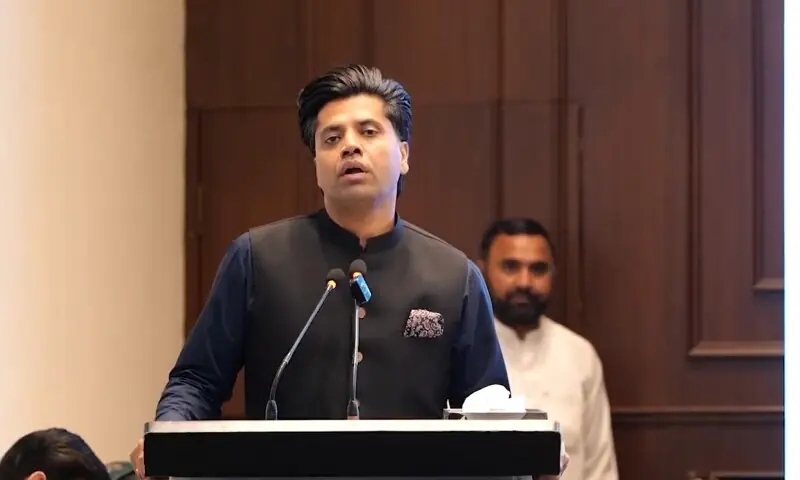
Addressing the gathering, information minister Shafiullah Jan declared the initiative a critical milestone in the provincial history and emphasised that the policy represented more than merely a policy document.
“This is not merely a document but our government’s solemn commitment to safeguarding the lives and properties of our 40 million citizens. We are now transitioning away from this reactive relief culture and advancing toward a culture of proactive preparedness, using scientific methods to anticipate risks and systematically mitigate their impacts before disasters strike,” he said.
Speaking on behalf of German Ambassador Ina Lepel, Head of Cooperation at the German Embassy Dr Mirjam Büdenbender-Buchholz congratulated the government of Khyber Pakhtunkhwa and PDMA on developing Pakistan’s first provincial DRR policy and reaffirmed Germany’s commitment to supporting a more disaster-resilient province.
She described the policy as a significant achievement that reflects leadership and readiness to invest in the future.
“Disaster risk is building over time,” driven by factors including population growth, informal settlement expansion, insufficient land-use planning and deforestation. The disaster risk reduction is about reducing the likelihood and the impact of hazardous events in the first place,” she said.
The five-year policy framework focuses on prevention and preparedness through early warning, risk-informed development, community resilience, disaster risk financing and Adaptive Social Protection, with a particular focus on protecting vulnerable households from climate and disaster shocks.
Chief secretary Shahab Ali Shah said that disaster management must now be treated as an integral part of governance and development. “Disaster management is no longer an additional or secondary function of the state,” he said, describing it as a fundamental basis of sustainable governance and fiscal responsibility.
Head of Programme Adaptive Social Protection at GIZ Pakistan Johanna Knoess highlighted the practical significance of linking disaster risk management with social protection.
She said that the integration allows vulnerability to be understood from more than one perspective: “Not only: who is poor. And not only: who is exposed. But: where do both overlap.”
The relief and rehabilitation secretary described the launch as the commencement of the implementation phase of the policy, saying its success will depend on sustained collaboration across government departments and stakeholders.
The launch event concluded with a renewed commitment by the provincial government and its partners to translate the policy into concrete action and build a resilient Khyber Pakhtunkhwa, where, they said, disaster risk reduction, preparedness, inclusive development and social protection were embedded in the province’s governance and development systems.