

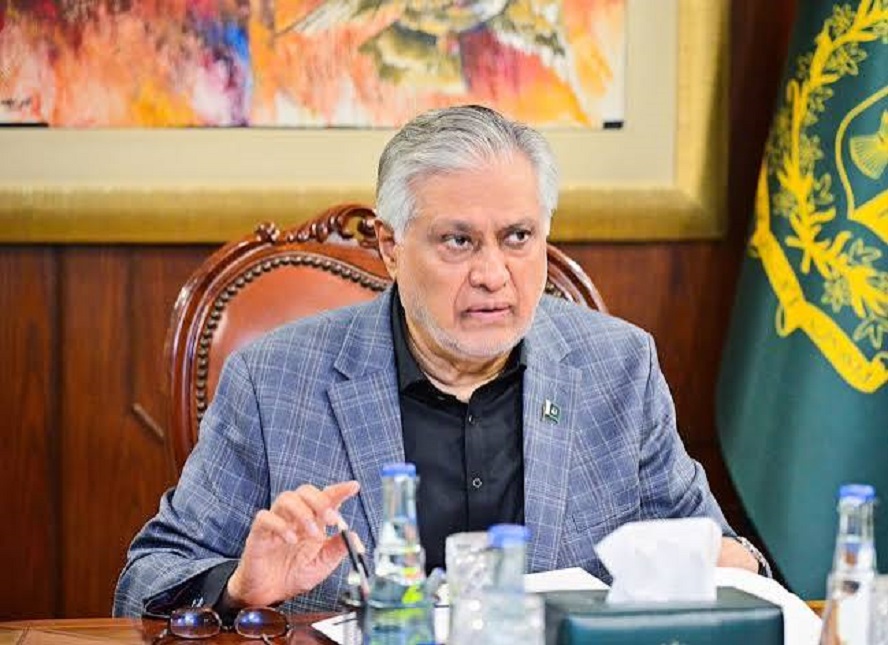
ISLAMABAD, (daily paklish): Deputy Prime Minister/Foreign Minister Senator Mohammad Ishaq Dar has reaffirmed Pakistan’s commitment to further strengthening its partnership with China through sustained political engagement and institutional cooperation.
Addressing a symposium in Islamabad on Monday, Ishaq Dar emphasized that the two countries should expand exchanges among their think tanks, universities and other institutions, particularly in the fields of governance, poverty alleviation and development planning. He said engaging young people was essential to carrying forward the legacy of this friendship.
Ishaq Dar noted that both countries are celebrating the 75th anniversary of the establishment of diplomatic relations. He said the relationship has evolved into an all-weather strategic cooperative partnership founded on mutual trust, mutual respect and mutual support.
He said a major source of strength for this relationship was the broad-based political consensus in Pakistan in support of its ties with China. He added that Pakistan-China friendship continues to serve as a steadfast source of peace and stability in the region and beyond.
Ishaq Dar appreciated China’s remarkable progress over the years. He said Pakistan had taken significant strides towards economic self-reliance and stabilization and was now moving towards economic consolidation. He emphasized that these gains were anchored in governance reforms, including macroeconomic discipline, institutional modernization, digital tax administration and simplified regulations.
Ishaq Dar said “Today’s symposium provides an important opportunity to reflect on the enduring role of political parties in governance, institution-building and national development, and to further deepen the longstanding party-to-party exchanges between Pakistan and China. In this regard, we acknowledge and commend the intellectual contribution of President Xi Jinping and his Thought on Party Building and the experience of the Communist Party of China in translating its principles into effective governance and tangible development outcomes.
Ishaq Dar said that the very convening of today’s symposium reflects the depth of political understanding and strategic trust that underpin the Pakistan-China relationship, while reaffirming our shared commitment to learning from each other’s experiences and advancing our common aspirations.
Ishaq Dar said “I look forward to hearing the valuable views and insights of the distinguished speakers. Minister Liu’s remarks provide a comprehensive understanding of President Xi Jinping Thought on Party Building from five dimensions: its theoretical foundations, application in practice, people-centred approach, cultural roots, and global significance. One overarching lesson I take from today’s conversation is that visionary leadership is indispensable to national unity, institutional stability and sustainable development. Under the sagacious leadership of President Xi Jinping, the Communist Party of China has accelerated China’s journey of national rejuvenation. China’s phenomenal progress has been driven by the CPC’s unwavering commitment to party discipline, organizational capacity, combating corruption and people-centred governance”.
Ishaq Dar said that through sustained policy efforts, China has lifted hundreds of millions of people out of poverty, making a historic contribution to global poverty alleviation. China has successfully achieved its first centenary goal and that is building a moderately prosperous society in all its aspects. It is now advancing towards its second centenary goal of building a great modern socialist country in all respects.
Ishaq Dar said that China’s experience offers invaluable best practices. It shows how far-sighted leadership sets long-term national priorities, mobilizes collective effort and turns priorities into tangible benefits for the betterment of the people.
Ishaq Dar said “For Pakistan, exchanging governance experience with our Chinese brethren is part of our longstanding, win-win partnership. Cooperation in leadership development, institutional strengthening and effective governance can help advance our shared goals of stability, prosperity and sustainable development. Pakistan has taken significant strides towards economic self-reliance and stabilization. We are now moving to economic consolidation. Our gains are anchored in governance reform, including macroeconomic discipline, institutional modernization, digital tax administration and simplified regulation”.
Ishaq Dar said “This year holds special significance for our two countries. Pakistan and China are celebrating the 75th anniversary of the establishment of diplomatic relations, and the Communist Party of China is commemorating its 105th founding anniversary. Over the past 75 years, Pakistan-China relations have grown into an All-Weather Strategic Cooperative Partnership, founded on mutual trust, mutual respect and mutual support. A powerful impetus for this relationship comes from the broad-based political consensus in Pakistan in support of our ties with China. Our All-Weather Strategic Cooperative Partnership reflects the recognition across our political spectrum that the Pakistan-China partnership is a vital strategic asset for the country”.
He said that the world has witnessed that the Pakistan-China partnership continues to serve as a steadfast source of peace and stability in the region and beyond. Ishaq Dar said “On 31st March this year, during my visit to Beijing at FM Wang Yi’s invitation. Pakistan and China jointly launched the Five Point Peace Initiative for restoring peace in the Middle East. Later, President Xi Jinping’s Four Point Peace Proposal for the Middle East marked a significant expression of China’s philosophy for promoting comprehensive, common and indivisible security. President Xi’s landmark Global Governance Initiative (GGI) has also underscored China’s consistent commitment to advancing fairness, justice and equity in the international governance architecture. These initiatives exemplify China’s commitment to the interests of developing countries and the Global South”.
Ishaq Dar said the IDCPC has been our key partner in nurturing Pakistan-China friendship through its sustained engagement with the political parties of Pakistan. The China-Pakistan Political Parties Forum and the CPEC Political Parties Joint Consultation Mechanism continue to provide valuable platforms for sustained dialogue, political cooperation and exchange of experiences between our two countries.
Ishaq Dar said “Our engagement underscores an important dimension of the Pakistan-China relationship: that its strength rests not only on intergovernmental cooperation but also on sustained political understanding, institutional linkages and exchanges between our political parties. During my visit to Beijing in May this year, we held the 2nd China-Pakistan Political Parties Forum and the 4th Meeting of the CPEC Political Parties Joint Consultation Mechanism. These meetings reaffirmed the importance of political engagement in advancing our shared objectives under CPEC 2.0. We also signed an MoU between the CPC and Pakistan Muslim League (N), reflecting our commitment to more structured and sustained party-to-party cooperation”.
Liu Haixing, Minister of the International Department of the Communist Party of China (CPC), said in his remarks that China and Pakistan had always relied on each other. He acknowledged that Pakistan’s political parties had long supported this friendship, adding that the two countries had developed a strong political foundation for bilateral relations.
The event brought together representatives of Pakistan’s political parties, including Federal Minister for Planning Professor Ahsan Iqbal, PPP Secretary General Syed Nayyer Hussain Bokhari, Senators Sherry Rehman, Senator Anusha Rahman Khan, Additional Secretary General, PML (N), and former Senator Mushahid Hussain Syed among others. Foreign Secretary and representatives of various political parties and think tanks also attended the event.